
Essential Kazakh Vocabulary For Nomadic Traditions

Author
If you really want to understand the Kazakh language, you have to understand Kazakh culture.
To understand Kazakh culture, you have to look at its nomadic roots.
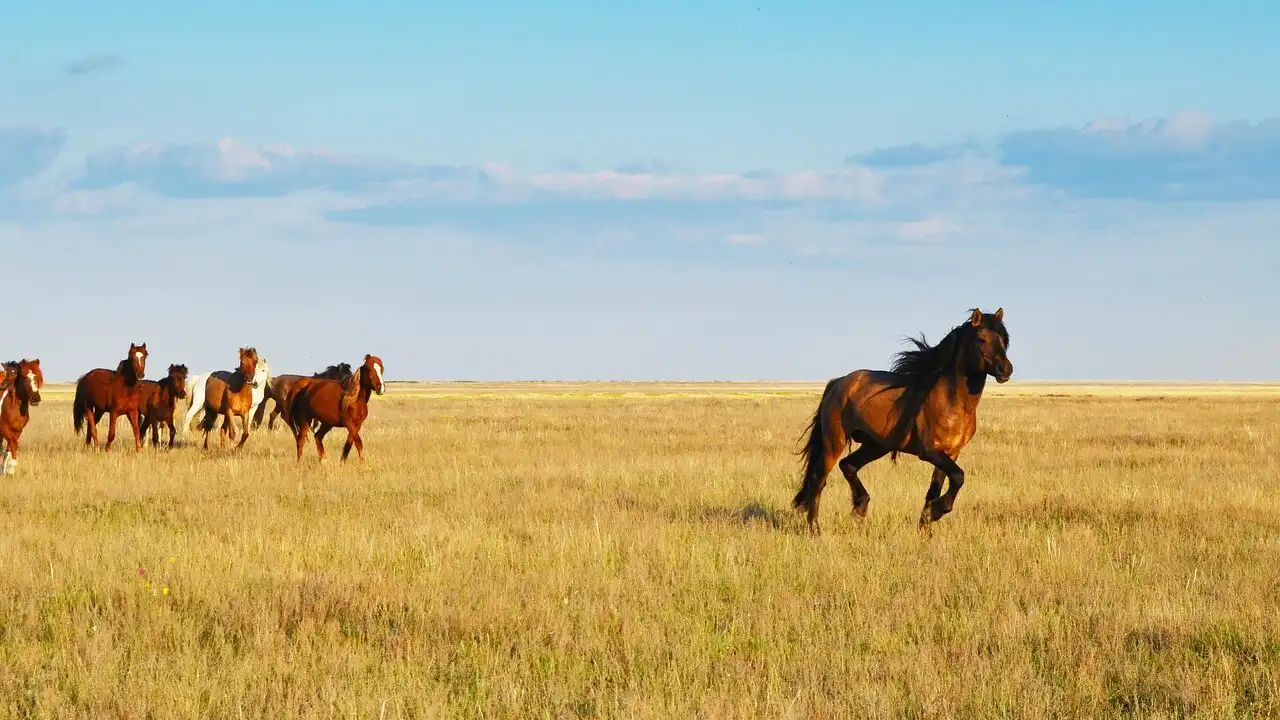
For thousands of years, the ancestors of modern Kazakhs roamed the vast Eurasian Steppe.
They moved with the seasons, living in portable tents, riding horses, and surviving the harsh, beautiful landscapes of Central Asia.
Because of this history, the Kazakh language is rich with vocabulary related to nature, livestock, and hospitality. Learning these words isn’t just a great way to build your vocabulary - it’s one of the best ways to connect with native speakers on a deeper level.
Culturally relevant words tend to stick in your memory much faster.
Let’s look at the essential vocabulary you need to talk about Kazakh nomadic traditions.
Table of Contents:
The yurt: the nomadic home
The traditional portable dwelling of the Kazakh nomads is called the yurt in English, but in Kazakh, it is called a kiiz üi (киіз үй). Literally translated, this means “felt house.”
These homes were incredibly practical. They kept the nomads warm in the freezing winters and cool during the hot summers, and they could be packed up and moved easily on horseback or camelback.
The most important part of the kiiz üi is the shańyraq (шаңырақ). This is the wooden crown at the very top of the yurt that lets smoke out and sunlight in. The shańyraq is so sacred in Kazakh culture that it represents family, home, and peace. In fact, if you look at the national flag of Kazakhstan, the golden sun-like symbol in the center is actually a shańyraq!
Here is some essential vocabulary related to the nomadic home:
| Kazakh (Cyrillic) | Transliteration | English Meaning |
|---|---|---|
| киіз үй | kiiz üi | yurt (felt house) |
| шаңырақ | shańyraq | top opening of the yurt / family hearth |
| кереге | kerege | wooden lattice walls of the yurt |
| дала | dala | the steppe / outdoors |
| ауыл | auyl | nomadic village / rural settlement |

Киіз үйге қош келдіңіз!
Көктемде дала өте әдемі.
Horses and livestock
You cannot talk about Kazakh history without talking about horses. The horse is central to nomadic survival, transportation, food, and clothing.
In Kazakh, the concept of livestock is divided into four main categories, known as tört tülik mal (төрт түлік мал). This refers to the four types of traditional nomadic livestock: horses, camels, sheep/goats, and cows.
The horse (jylqy) is the most respected animal. Even today, you will find that the Kazakh language has dozens of specific words just to describe a horse’s color, age, and behavior!
| Kazakh (Cyrillic) | Transliteration | English Meaning |
|---|---|---|
| жылқы | jylqy | horse |
| түйе | tüie | camel |
| қой | qoi | sheep |
| мал | mal | livestock / cattle |
| ат міну | at miný | to ride a horse |
Сен ат міне аласың ба?
Жылқы қазақтар үшін өте маңызды.
Nomadic hospitality and food
Surviving on the open steppe was difficult, so taking care of travelers became a sacred duty. This tradition of extreme hospitality is called qonaqjaılylyq (қонақжайлылық).
If you are a guest (qonaq) in a Kazakh home, you will be treated with immense respect. You will be seated at the place of honor, called the tór (төр), which is the seat furthest from the door.
You will also be fed… a lot! The national dish is a heavy meal of boiled meat and wide, flat noodles. While many foreigners know this dish as besbarmaq (which means “five fingers,” because it was traditionally eaten with the hands), there is an important regional variation to keep in mind. In the southern and western regions of Kazakhstan, locals usually just call this dish et (ет), which simply means “meat.”
You will also likely be served qymyz (fermented mare’s milk) and baýyrsaq (puffy fried dough bread).
| Kazakh (Cyrillic) | Transliteration | English Meaning |
|---|---|---|
| қонақ | qonaq | guest |
| төр | tór | place of honor (seat) |
| ет / бесбармақ | et / besbarmaq | national dish of meat and noodles |
| қымыз | qymyz | fermented mare’s milk |
| бауырсақ | baýyrsaq | fried dough |
Қонақ болыңыз! Төрге шығыңыз.
Сіз қымыз ішіп көрдіңіз бе?
Traditional clothing and music
Nomadic clothing was designed for riding horses and surviving extreme weather. The most famous piece of traditional clothing is the shapan (шапан), a long, heavy robe often given as a gift of high honor. If a Kazakh family really respects you, they might drape a beautiful shapan over your shoulders!
Music was also highly portable. The most famous Kazakh instrument is the dombyra (домбыра), a two-stringed wooden lute with a long neck. Nomads would sit in the yurt and play the dombyra to tell epic stories, pass down history, and entertain guests.
| Kazakh (Cyrillic) | Transliteration | English Meaning |
|---|---|---|
| шапан | shapan | traditional long robe |
| сәукеле | säýkele | traditional tall bridal headpiece |
| домбыра | dombyra | traditional two-stringed instrument |
| күй | kúi | traditional instrumental musical piece |
| ақын | aqyn | improvisational poet / singer |
Ол домбырада жақсы ойнайды.
Бұл шапан – сізге арналған сыйлық.
Keep exploring the steppe
Learning the vocabulary of the Kazakh nomads will give you a major advantage in your language learning journey. Not only will you understand traditional stories and songs better, but native speakers will be thrilled that you took the time to learn about their history.
A few tips for remembering these culturally rich words:
- Try searching for videos of a dombyra performance on YouTube to hear the words in action.
- Read up on how a kiiz üi (yurt) is built; visual association makes vocabulary stick.
- If you ever visit Kazakhstan, make sure to accept invitations to drink tea - it’s the best language practice you can get.